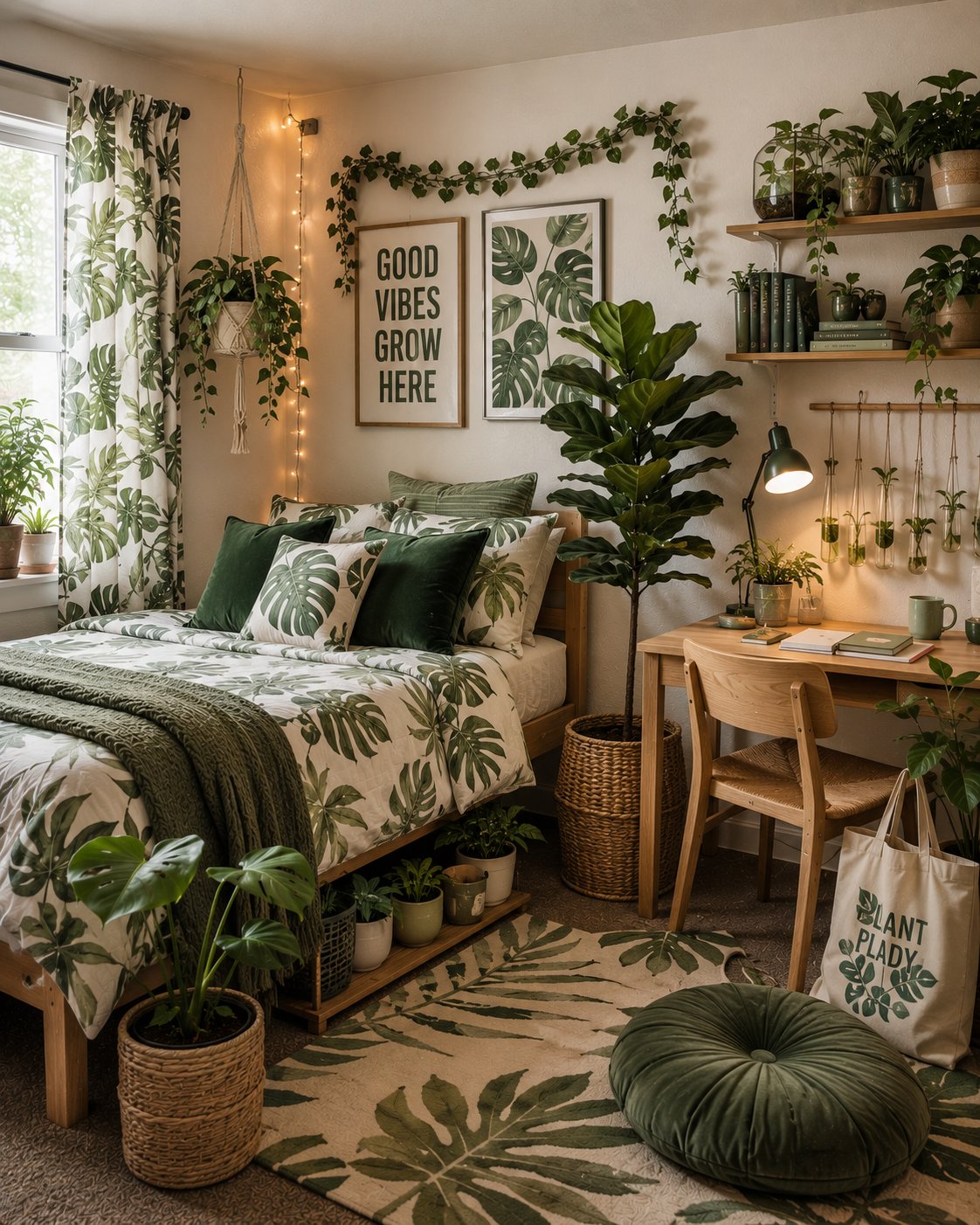
Urban jungle is one of the few aesthetics that genuinely scales with effort — a single good plant establishes the look, and it only gets richer from there. Here's how to build it in layers.
Start with one tall statement plant
A large faux monstera in a floor planter does the most visual work of anything on this list, and it's zero-maintenance if you're not around during breaks to water anything.
Use vertical space, not just the floor
A macrame plant hanger near a window uses space that would otherwise sit empty, and it adds height variation that a room full of floor plants alone can't achieve.
Vary height and leaf shape before you worry about adding more plants — three different shapes read richer than six identical ones.
A terrarium adds a self-contained detail
A wide-mouth glass terrarium works well on a desk or dresser for moss or a small succulent, and it reads as intentional rather than just "another plant."
A second tall plant changes the whole balance
Once the first statement plant is in place, a second one — like a faux fiddle leaf fig — on the opposite side of the room makes the space feel enveloped rather than accented.
The common mistake here is buying five of the same small plant instead of two or three plants in different heights and leaf shapes. Variety, not volume, is what makes this aesthetic work.
Real vs. Faux: The Honest Answer
Most dorm windows only provide indirect light, which limits what real plants will actually thrive on regardless of how good your intentions are. Faux plants sidestep the issue entirely and now look convincing enough that most people can't tell from normal viewing distance — there's no aesthetic penalty for going faux in this style.
Budget Breakdown
A macrame plant hanger set and a graduated ceramic pot set together run around $55 and cover hanging and tabletop greenery. Add a large faux monstera as the room's statement plant, and the full layered look comes together for well under $100.
Common Mistakes
Choosing real plants without checking your actual window's light exposure first is a common issue, leading to plants that struggle within a semester. Skipping the pot upgrade — leaving a plant in its plain plastic nursery pot — also looks noticeably less finished than the same plant in a ceramic or woven cover.